Satya Nadella Warns Critical Infrastructure Remains Unpatchable Amid Rising AI Cyberattack Fears
Author : Ravit Jain
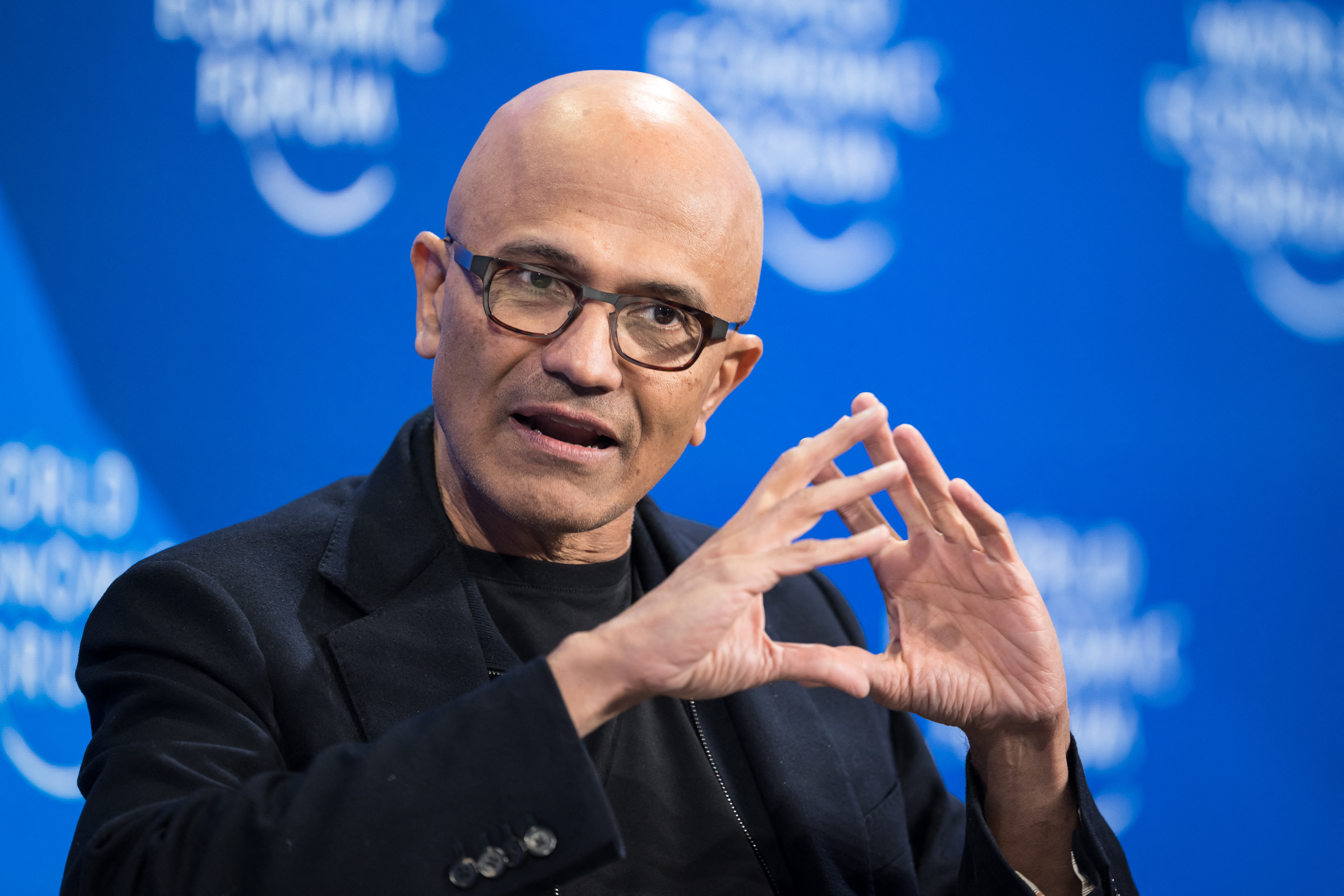
Microsoft CEO Satya Nadella used a high-profile public appearance this week to raise alarms about a vulnerability problem that has been quietly building for years: vast portions of America's critical infrastructure are running software that simply cannot be updated or patched, leaving them exposed to a new generation of AI-powered cyberattacks.
Speaking at The New York Times DealBook Summit on Wednesday, Nadella drew attention to the millions of internet-connected devices embedded in everyday systems - from data center cooling equipment to building management hardware - that were never designed with modern security requirements in mind.
"Remember, there is a lot of stuff in our critical infrastructure that's unpatchable. Think about all the firmware and the chillers and the HVAC systems everywhere else. So all of that, by the way, they're on the internet."
The remarks reflect a growing concern in the technology and security industries about what has come to be known as the Internet of Things problem. Over the past two decades, enormous numbers of previously offline devices - industrial controllers, environmental systems, transportation hardware - were connected to the internet as part of a broader push to digitize and automate the physical world. That process, which brought genuine efficiency gains, also created an enormous and largely unaddressed attack surface.
A Backdrop of High-Profile Outages
Nadella's comments came at a moment when large-scale technology failures have been drawing increased public scrutiny. Recent disruptions have affected a range of major institutions and platforms, including Microsoft's own Outlook email service, as well as incidents involving the NSA, the FAA, and Apple. While speculation has circulated that some of these outages may be linked to deliberate cyberattacks, authorities have pushed back on those characterizations. Regardless of their cause, the incidents have intensified pressure on technology companies to reassess how they identify and address security weaknesses.
On the subject of the Outlook disruption specifically, Nadella acknowledged the widespread inconvenience it caused and described the root cause as a "latent bug" that produced what he called a "perfect storm" of conditions leading to the outage.
"We put out an incident response, and we're going to obviously take all of the learnings, both upstream architectural, as well as operational, and fix that."
Transportation and Firmware Risks
Nadella extended his concerns beyond data centers and office buildings, noting that transportation infrastructure faces similar challenges. He recounted a conversation in which someone described the volume of discoverable but unpatchable firmware running across transportation networks - a detail that underscored just how broadly the vulnerability problem extends.
"Somebody was telling me about even the transportation systems and the amount of stuff that's discoverable but with unpatchable firmware," he said, adding that a serious modernization effort would be necessary and that organizations would need to carefully evaluate their threat exposure and their real-time capacity to both detect and respond to attacks.
The Paradox of Faster Patching
One of the more nuanced points Nadella raised was the unintended consequences of accelerating the software patching process itself. Historically, when a vulnerability was discovered, security teams had a reasonable window of time to study the flaw, test a fix thoroughly, and roll it out in a controlled manner. That window has narrowed dramatically as AI tools have made it faster and easier both to find vulnerabilities and to exploit them.
Nadella acknowledged that the industry now has more powerful tools than ever for identifying software weaknesses. However, the speed at which those vulnerabilities can be weaponized has forced a corresponding acceleration in how quickly patches must be deployed - and that urgency introduces its own risks.
"The patch needs to go instantly from being available to being patched in production, because it's being exploited in the wild. So that's going to create instability."
The dynamic he described is one that security professionals have been grappling with for some time. When patches are rushed into production environments without adequate testing, they can introduce new bugs or trigger unexpected system behavior - a trade-off that becomes increasingly difficult to manage as the pace of both attack and defense continues to accelerate.
AI as Both Tool and Threat
Underlying much of Nadella's commentary was the dual role that artificial intelligence now plays in the cybersecurity landscape. On one hand, AI is being adopted by security teams as a means of scanning codebases, identifying vulnerabilities, and automating responses at a scale that would be impossible for human analysts alone. On the other hand, the same capabilities are available to malicious actors, lowering the barrier to entry for sophisticated attacks that previously required significant technical expertise.
The combination of AI-assisted exploitation and a global installed base of legacy, unpatchable systems represents what many in the industry regard as one of the most pressing security challenges of the current era. Nadella's remarks at the DealBook Summit signal that even the leadership of the world's largest software companies is acutely aware of how far the problem extends - and how much work remains to address it.
Source Credits : TechCrunch