Satya Nadella Says AI Agents Will Fundamentally Reshape the Web Economy
Author : Ravit Jain
Microsoft's chief executive Satya Nadella has made a bold prediction about the future of the internet, arguing that the rapid adoption of AI agents will fundamentally disrupt the economic structures that currently underpin the web - particularly the advertising-driven models that major platforms have relied on for decades. Nadella believes this shift will prove as consequential as the move from web portals to search engines.
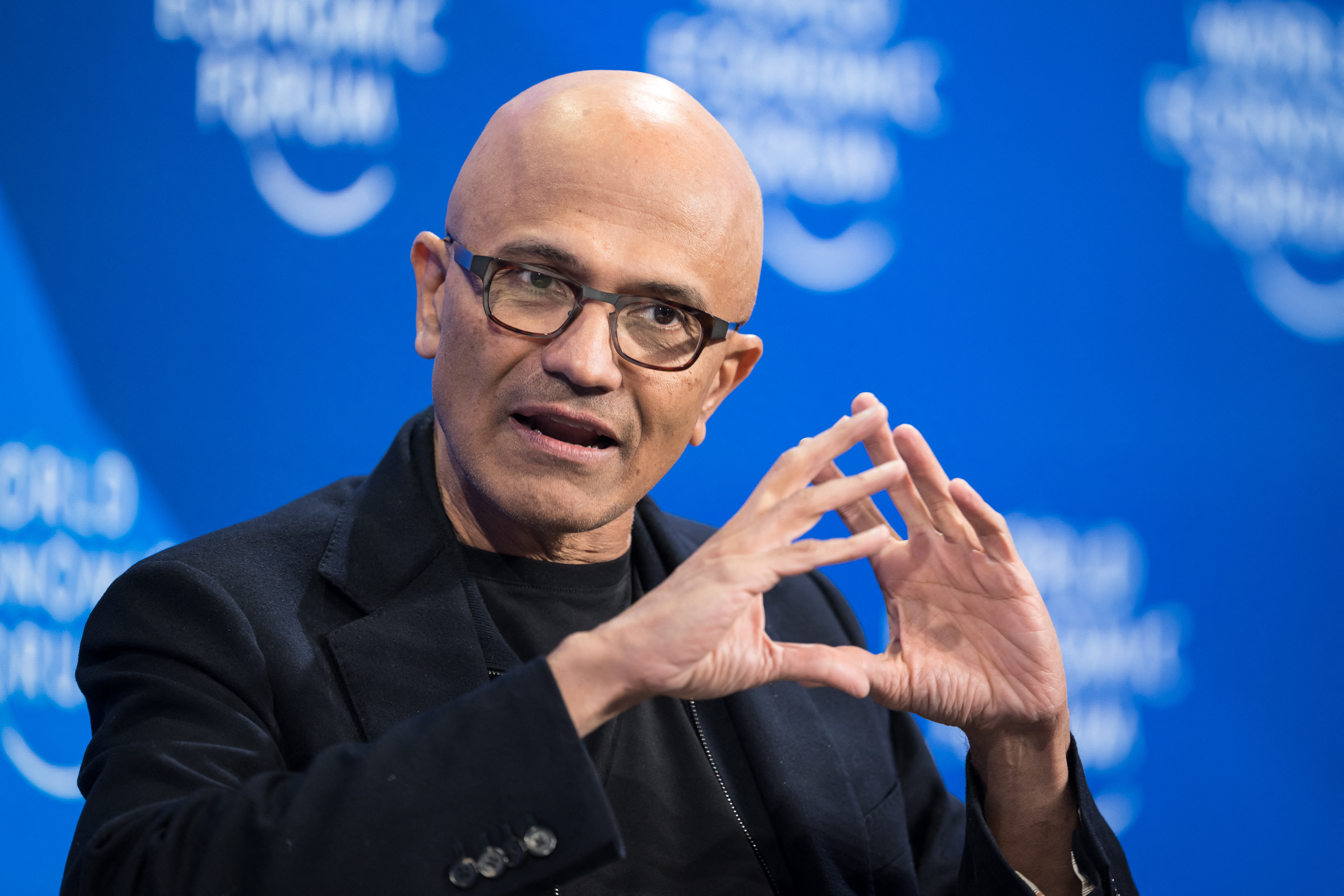
Nadella made these remarks while speaking at The New York Times DealBook Summit on Wednesday, where he outlined his view that the transition toward what he described as an "agentic web" will force a significant reshuffling of power among today's dominant internet companies.
From Human Traffic to Agent-Driven Transactions
At the heart of Nadella's argument is the idea that the web was built around human behavior - people clicking links, viewing advertisements, and generating the kind of traffic that platforms could monetize through ad impressions. AI agents, which act autonomously on behalf of users to search, compare, and complete tasks, operate in an entirely different way. They do not "see" ads in the traditional sense, and their behavior does not map neatly onto the metrics that advertising businesses have long depended upon.
Nadella drew a direct parallel to the disruption caused by the rise of search engines. When companies like Yahoo dominated the web as portals, they controlled how users navigated the internet. The emergence of Google and its search-first model upended that arrangement entirely, rewiring where attention and money flowed. Nadella suggested that the shift to AI agents could trigger a similar realignment.
"The current aggregators who have a business model which was for the human web will get, in some sense, reshuffled. And if you were monetizing ads because of the eyeballs, you now have to probably get down to essentially maybe CPC [cost-per-click] wins; maybe it's more transactional. And so if you don't accept the agent, somebody else will."
His comments point to a scenario in which platforms that refuse to accommodate AI agents risk losing relevance, while those that open themselves up to agent-driven interactions could capture a new and growing segment of digital commerce.
Amazon's Approach Draws Scrutiny
The conversation at the summit moved to Amazon and its reported decision to restrict AI agents from accessing its retail platform. By blocking agents from browsing product listings and completing purchases on behalf of users, Amazon is effectively trying to preserve the traditional shopping experience - one where human users interact directly with its interface and, by extension, its advertising and promotional ecosystem.
Nadella framed this approach as a potentially risky strategy. In his view, companies that prioritize protecting existing revenue streams over adapting to new technological realities could find themselves outpaced by more flexible competitors. He pointed to Shopify as an example of a platform that could step in and gain a competitive edge simply by welcoming AI agents that Amazon has turned away.
The implication is straightforward: if a user's AI agent cannot complete a purchase on one platform, it will simply go elsewhere. The loyalty, in this new paradigm, belongs to the agent's ability to complete a task - not to any particular retailer or marketplace.
Adapting or Being Left Behind
Nadella acknowledged that the transition will not be without turbulence for established players. Companies that have built their entire business logic around current web behaviors will need to move quickly to adapt, or risk being displaced by more agile competitors.
"I think this is going to be interesting. It's the same thing that's happening in other categories, right? Which is, if you're in love with a particular business model, you have to kind of scramble."
The broader message from Nadella is that the economics of the internet are entering a period of genuine upheaval. The advertising model that has powered the web for the better part of three decades - built on clicks, impressions, and human attention - may give way to something more transactional and task-oriented, driven not by people browsing but by software acting on their behalf.
For businesses across retail, media, and digital services, the challenge will be determining how to position themselves in a web where the primary "users" may increasingly be AI systems rather than people. Whether that means redesigning how products are listed, how transactions are structured, or how value is exchanged remains an open question - but Nadella's remarks suggest that the window for adaptation may be narrowing faster than many companies expect.
Source Credits : TechCrunch