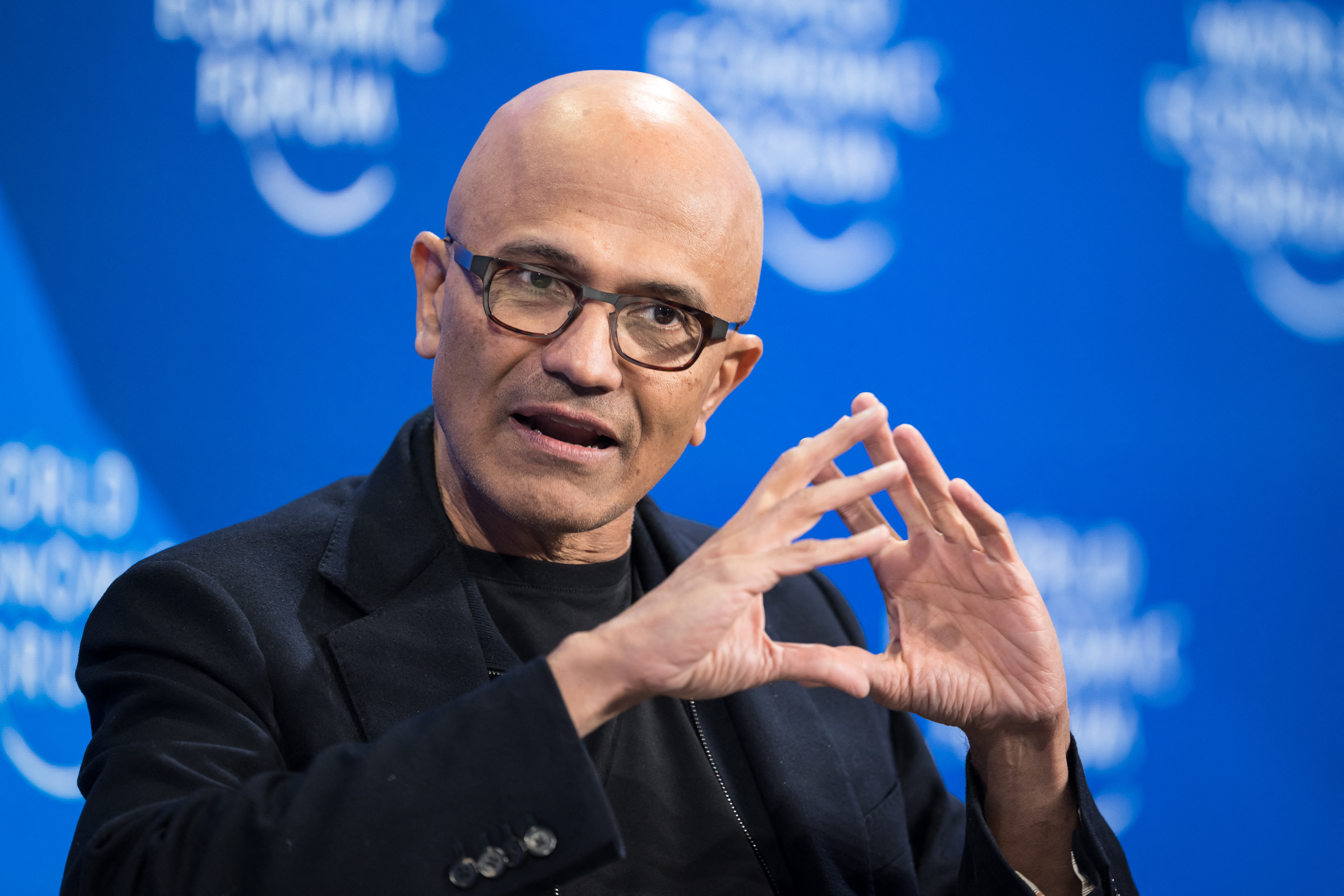
Microsoft CEO Satya Nadella Reveals True Reason Behind Mass 60000 Employee Departure
Author : Ravit Jain
In a candid public appearance on Wednesday, Microsoft CEO Satya Nadella addressed one of the more unusual corporate decisions of recent months - offering voluntary buyouts to roughly 60,000 employees back in October, rather than proceeding with another round of large-scale involuntary layoffs. His explanation centered on artificial intelligence, though he was careful to frame the reasoning in a way that pushes back against the most common assumptions surrounding AI and job displacement.
Nadella's core argument is not that AI is being deployed to replace workers, particularly software engineers. Instead, he described a fundamental restructuring of how Microsoft operates - one in which every employee is expected to integrate AI into their daily workflow, shifting their role from doing the work directly to directing and managing AI systems that do it on their behalf.
A Company Reorganizing Around AI
Speaking with journalist Andrew Ross Sorkin at the DealBook Summit, Nadella outlined how thinking about AI and software development has evolved rapidly, even within Microsoft itself. He described a progression in how the industry has perceived AI's capabilities in software engineering - moving from outright skepticism, to sudden alarm, and finally to a more measured understanding.
"We went from, 'Well, we don't buy that AI can ever do software.' To suddenly, 'Wow, it can do all software, and why do we need software engineers?' To now rediscovering that software engineering is very much alive and, in fact, is going to thrive, except the way the team is organized and the work that a software engineer does has now got a new operating point."
He acknowledged that for many people, navigating that kind of organizational and professional change is genuinely difficult, but argued it is a necessary transition regardless.
To illustrate what this new model looks like in practice, Nadella pointed to the team responsible for building Copilot, the AI agent integrated into Microsoft 365 applications. That team, he said, is made up of just 11 developers - a remarkably small group that has fully embraced AI-assisted development to the point where their function has fundamentally changed. "They build a software factory that builds the product. They don't build the product," he said.
In Nadella's vision, this kind of arrangement is not an outlier. He believes it represents the future of virtually every job at Microsoft and, by extension, across the broader economy. Rather than performing tasks directly, employees will increasingly act as managers of AI agents, providing direction and oversight. "That level of direction is what, by the way, is going to happen in all jobs," he said.
The Challenge Facing an Established Company
Nadella was also candid about the structural difficulty Microsoft faces in making this transition. As a company with more than five decades of history, Microsoft was not built from the ground up with an AI-first philosophy. Embedding that approach across an organization of its scale and complexity is a different challenge than it would be for a newer company.
"So the question is, how quickly can an incumbent transform the work, the workflow, and the work artifact, and with all the wage support that goes with it?" he said. "It's going to take a bit more time than anyone expects. And there is going to be in all of this, you know, people who may say, 'Hey, I have some other choices I want to make.'"
That last point goes directly to the rationale behind the buyout offer. Rather than forcing change on employees who might not want to adapt to a dramatically different working model, Nadella said the intention was to give people a genuine choice. The buyout was, in his words, "to make sure that at least everyone felt like they had agency in making choices."
Addressing Anxiety Around AI and Job Security
Nadella expanded on this theme in a separate conversation the previous week, speaking with software engineer and writer Gergely Orosz on The Pragmatic Engineer podcast. In that discussion, he pointed to a broader problem with how the AI revolution has been communicated to the public and to workers specifically.
"We have created enormous anxiety in people sort of feeling that they don't have control of their own destiny because the way we have talked about this AI revolution," he said.
He referenced widespread discussion about the concept of the technological singularity - the theoretical threshold at which artificial intelligence surpasses human cognitive ability - as well as sweeping predictions that AI will eliminate the vast majority of human jobs. Nadella argued that this kind of rhetoric, even when well-intentioned, generates a climate of fear that makes productive change harder, not easier.
"All of that leads anyone who even wants to change to be sort of anxious," he said. His prescription is for companies to move beyond the rhetoric and take concrete action - making structural changes, repositioning people within the organization, and creating real opportunities for employees to grow into the new model. "You have to sort of walk the hard walk of really making the structural changes, getting people slotted, giving them opportunity."
The Underlying Message of the Buyout
Taken together, Nadella's comments paint a clear picture of what the buyout offer was intended to communicate internally. Microsoft is committed to becoming an AI-first organization, and that transformation will substantially alter what most jobs at the company look like. Employees who are willing to adapt and operate within that new framework are welcome to stay and grow with the company. Those who would prefer not to make that transition were given a structured, voluntary path to leave.
It is a notably different framing from the traditional corporate layoff announcement, which typically emphasizes cost-cutting or restructuring for efficiency. Nadella's version positions the move as an act of transparency and respect for employee autonomy - a way of acknowledging that not everyone will want to work in the kind of organization Microsoft is becoming, and offering a dignified exit for those who feel that way.
Whether that framing resonates with the 60,000 employees who received the offer - or with the broader workforce watching how major technology companies navigate the AI transition - remains to be seen. But Nadella's willingness to explain the reasoning publicly, in detail and across multiple forums, suggests Microsoft is at least attempting to manage the cultural dimensions of this shift as carefully as the operational ones.
Source Credits : TechCrunch