BREAKING: Cloudera Turns Anywhere Cloud Into a Private AI Factory at EVOLVE26 New York
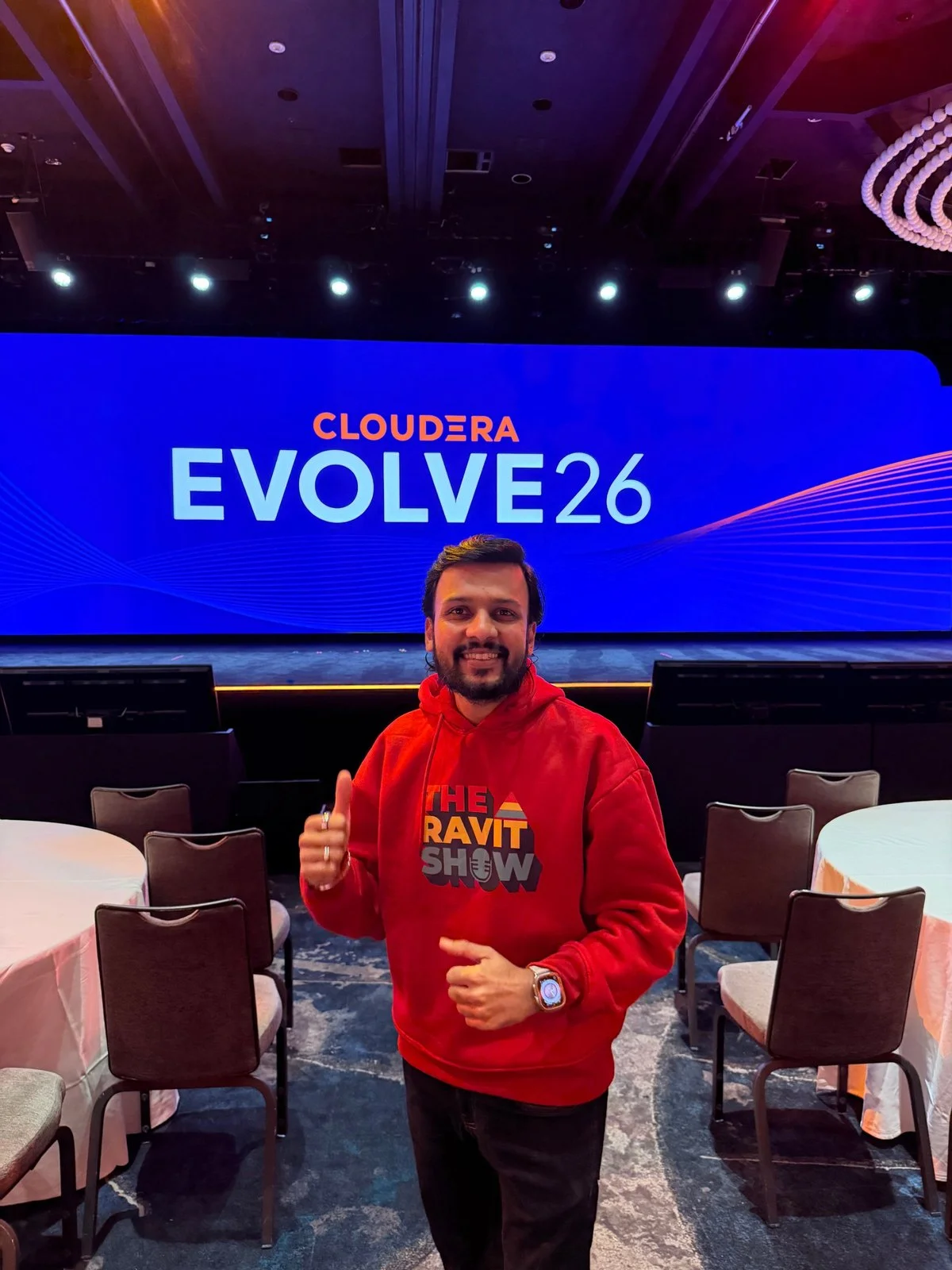
The keynote at Cloudera EVOLVE26 in New York just wrapped, and I am still sitting in the hall going through my photos.
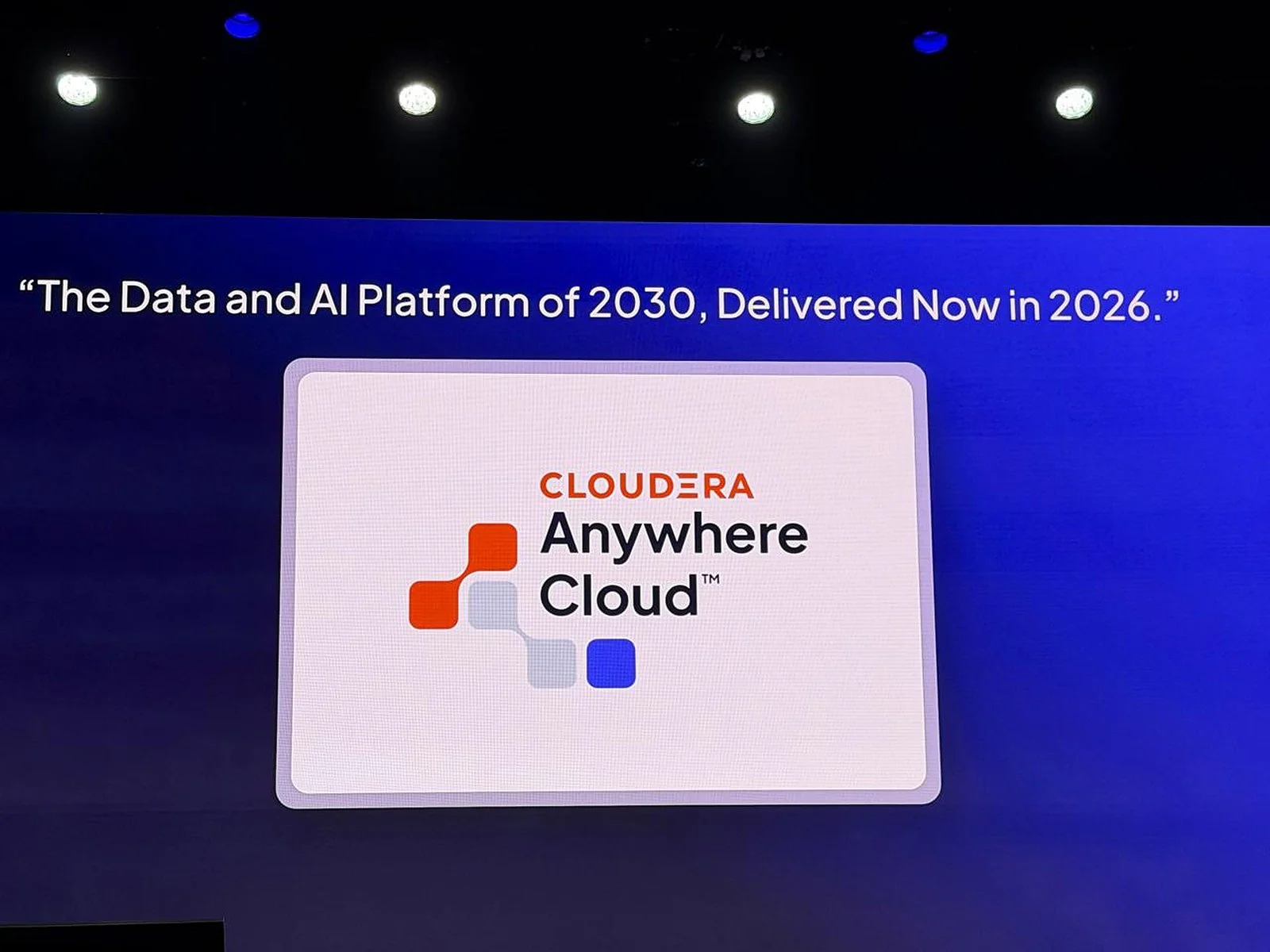
If I had to sum up the morning in 1 sentence, it would be the line Cloudera put on the big screen: "The Data and AI Platform of 2030, Delivered Now in 2026."
That is a bold claim. So let me walk you through what was actually announced, slide by slide, and then tell you what I really think.
Where Cloudera is coming from
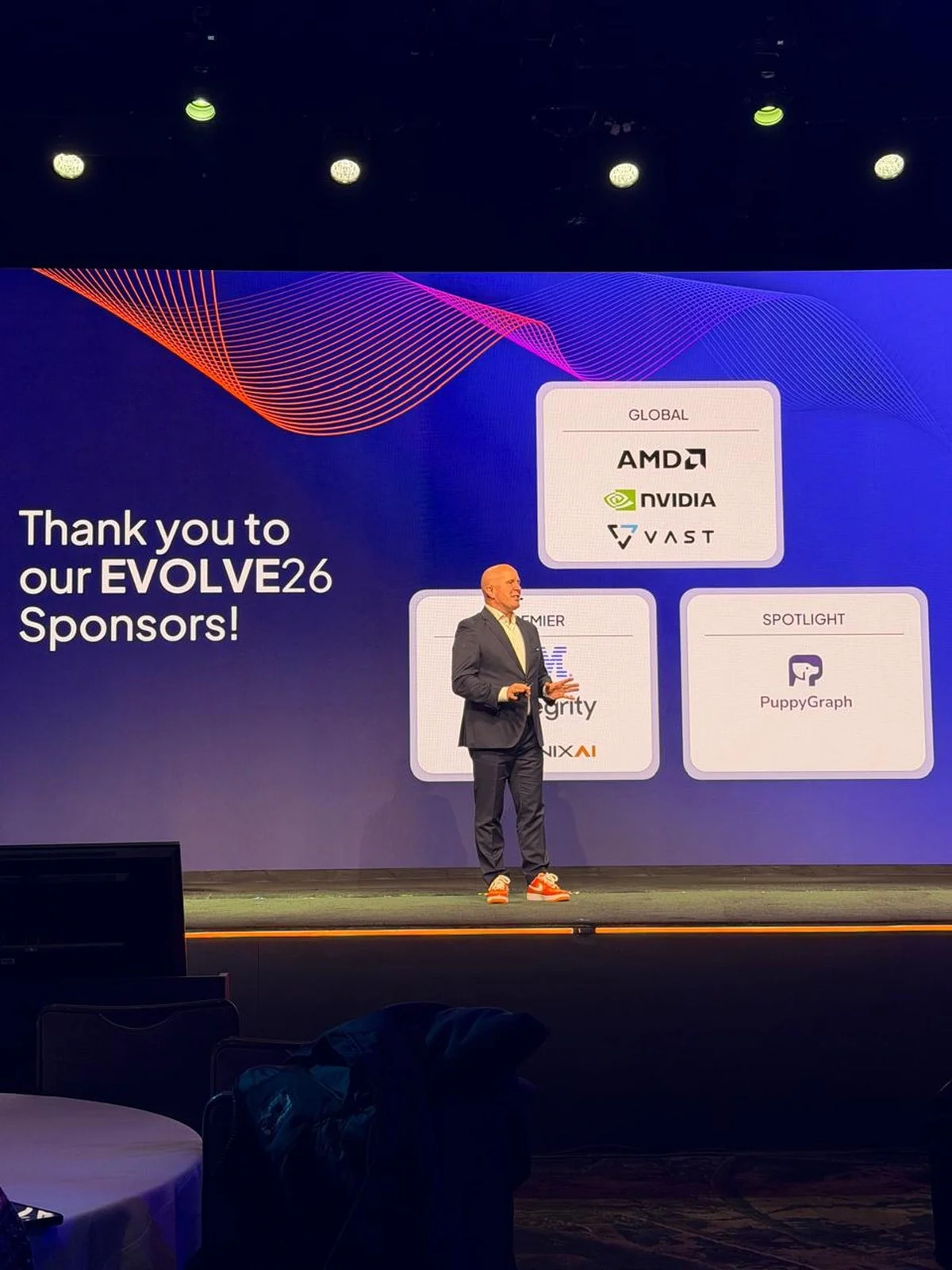
The keynote opened with a thank you to the sponsors. AMD, NVIDIA and VAST at the top tier. PhoenixAI in the premier tier. PuppyGraph in the spotlight. That lineup alone tells you where this conversation is going: compute, accelerated infrastructure and new data engines.
Then Cloudera told its own story, and I think it is worth knowing. The company went private in 2021. In 2022 it shipped its hybrid platform with support for multi-cloud, Apache Iceberg and Apache Ozone. In 2023 it leaned into the open data lakehouse and enterprise AI. In 2024 it launched its Enterprise AI Ecosystem and bought Verta and Octopai. In 2025 it acquired Taikun to deliver the cloud anywhere. And in 2026, Anywhere Cloud.
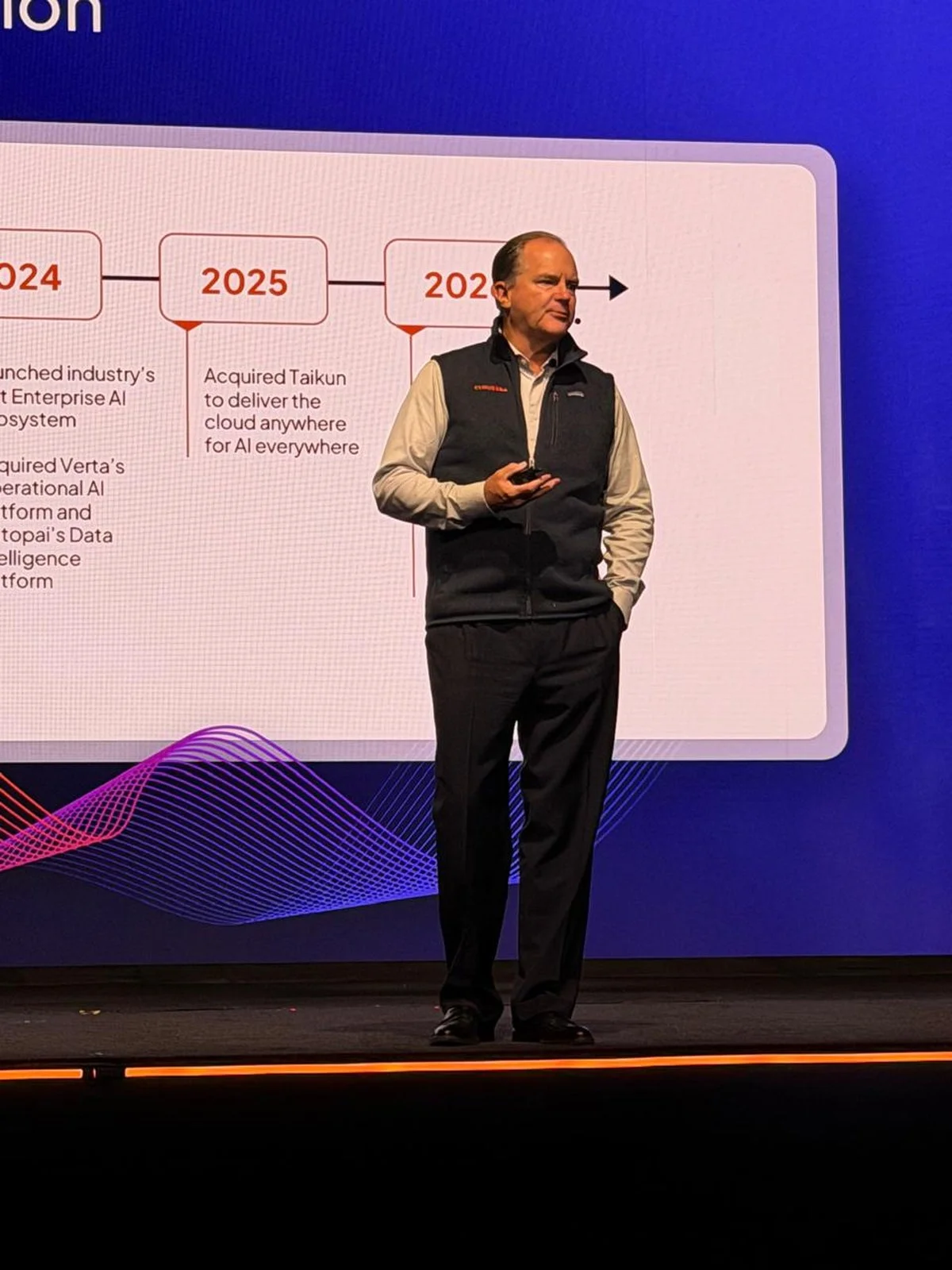
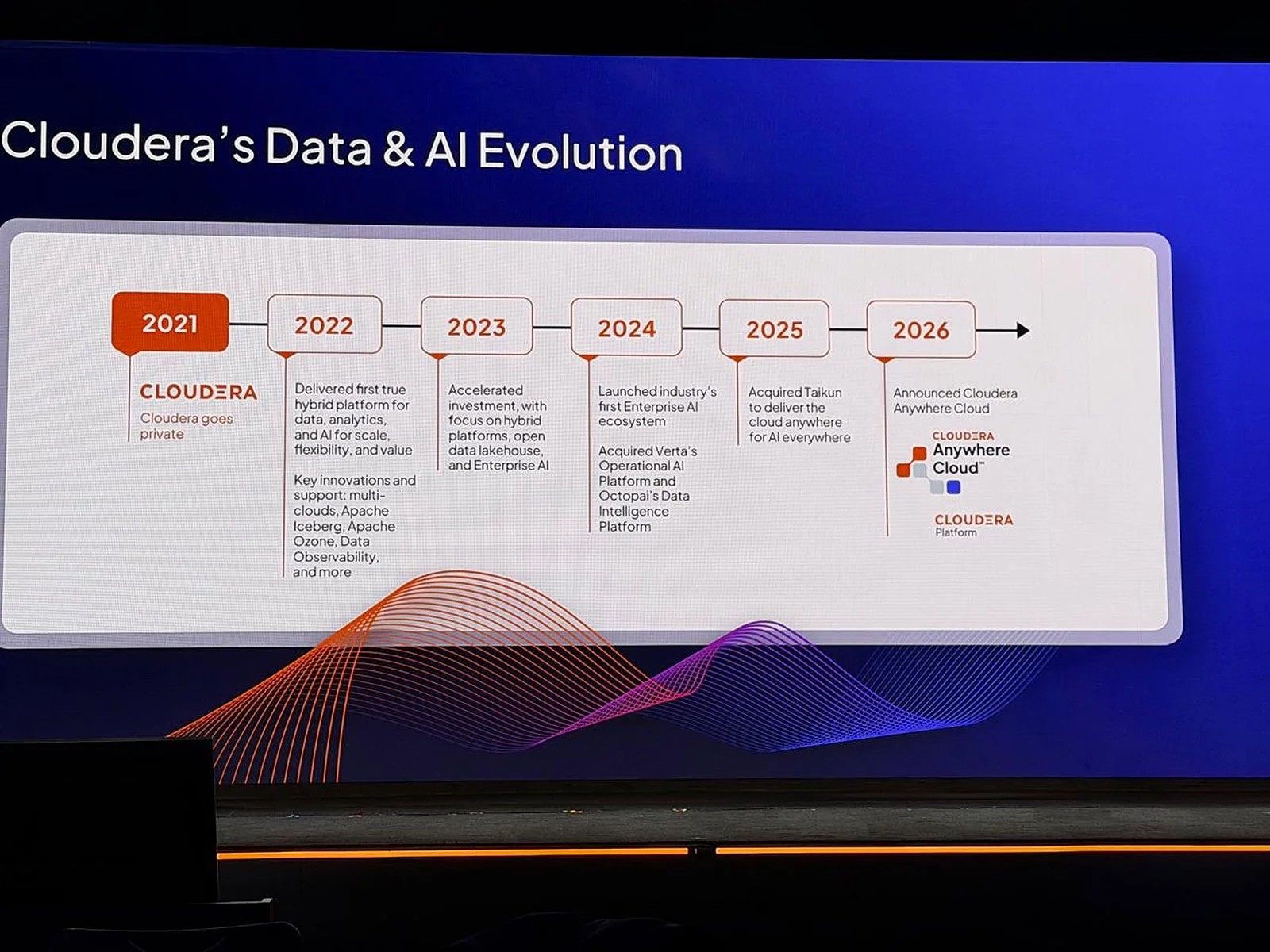
I like that they showed this. Every big platform shift looks sudden from the outside. From the inside it is 5 years of quiet groundwork.
Anywhere Cloud is now the foundation for everything
Cloudera Anywhere Cloud was first launched in August at EVOLVE Singapore. Today in New York, it went from "new product" to "the base of the whole strategy."
Here is how I read the architecture slide. Agentic orchestration runs down the side of the entire stack. A marketplace sits on top, where Cloudera's own data services live next to partner engines like OLTP, OLAP and graph databases, and open compute like vector databases and your own apps. Under that is the Unified Data Fabric, which carries policy, governance, lineage and audit. And under that are foundation services that deploy the whole thing to AWS, Azure, Google Cloud, your own data center or a sovereign cloud.
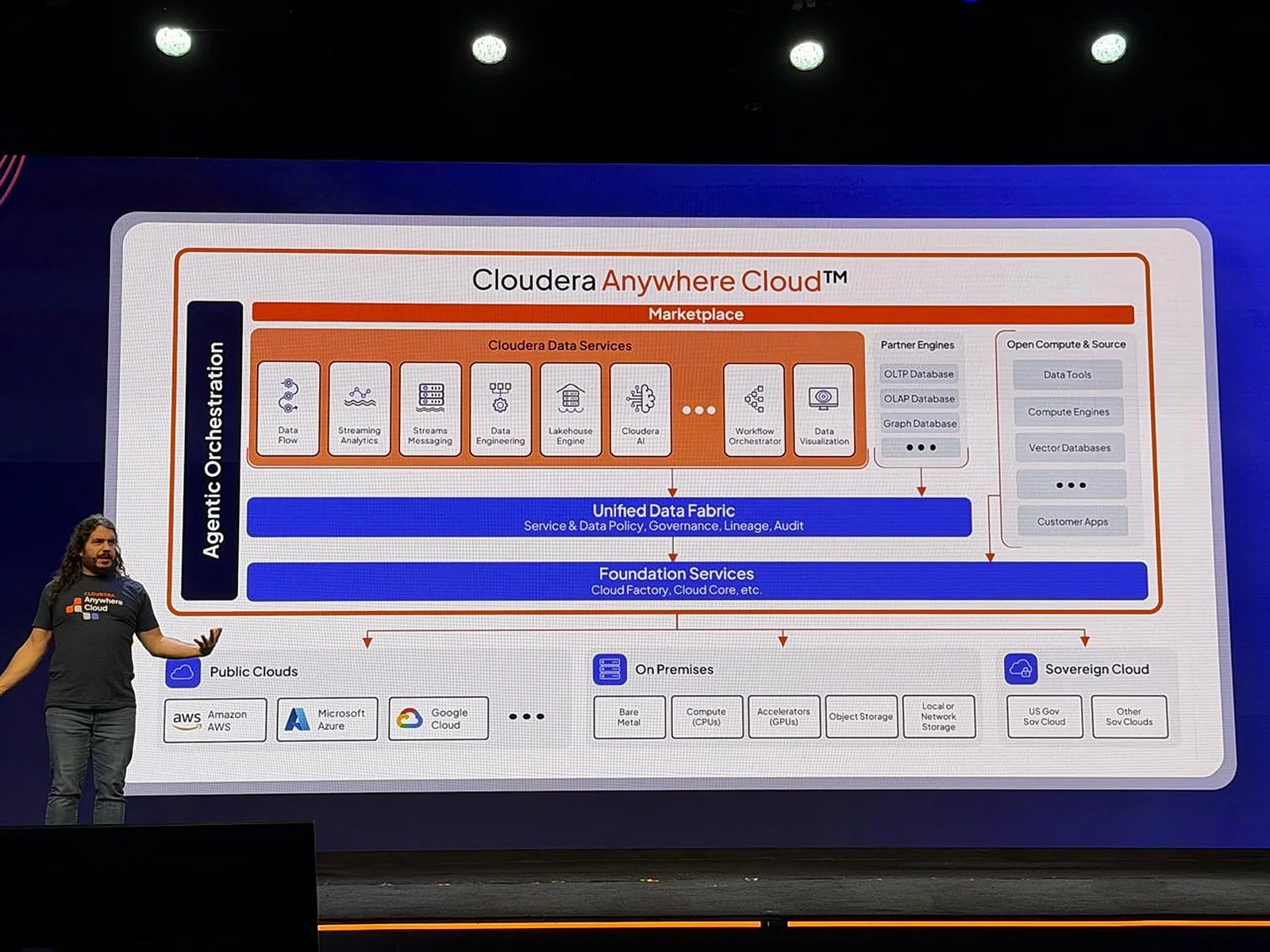
StorageReview described it well as 1 control plane across public, sovereign and on-prem. CTO Sergio Gago went further in an interview with DataCentreNews, saying Anywhere Cloud carries no Hadoop code at all. For a company that grew up on Hadoop, that is a real line in the sand.
The question every existing customer has
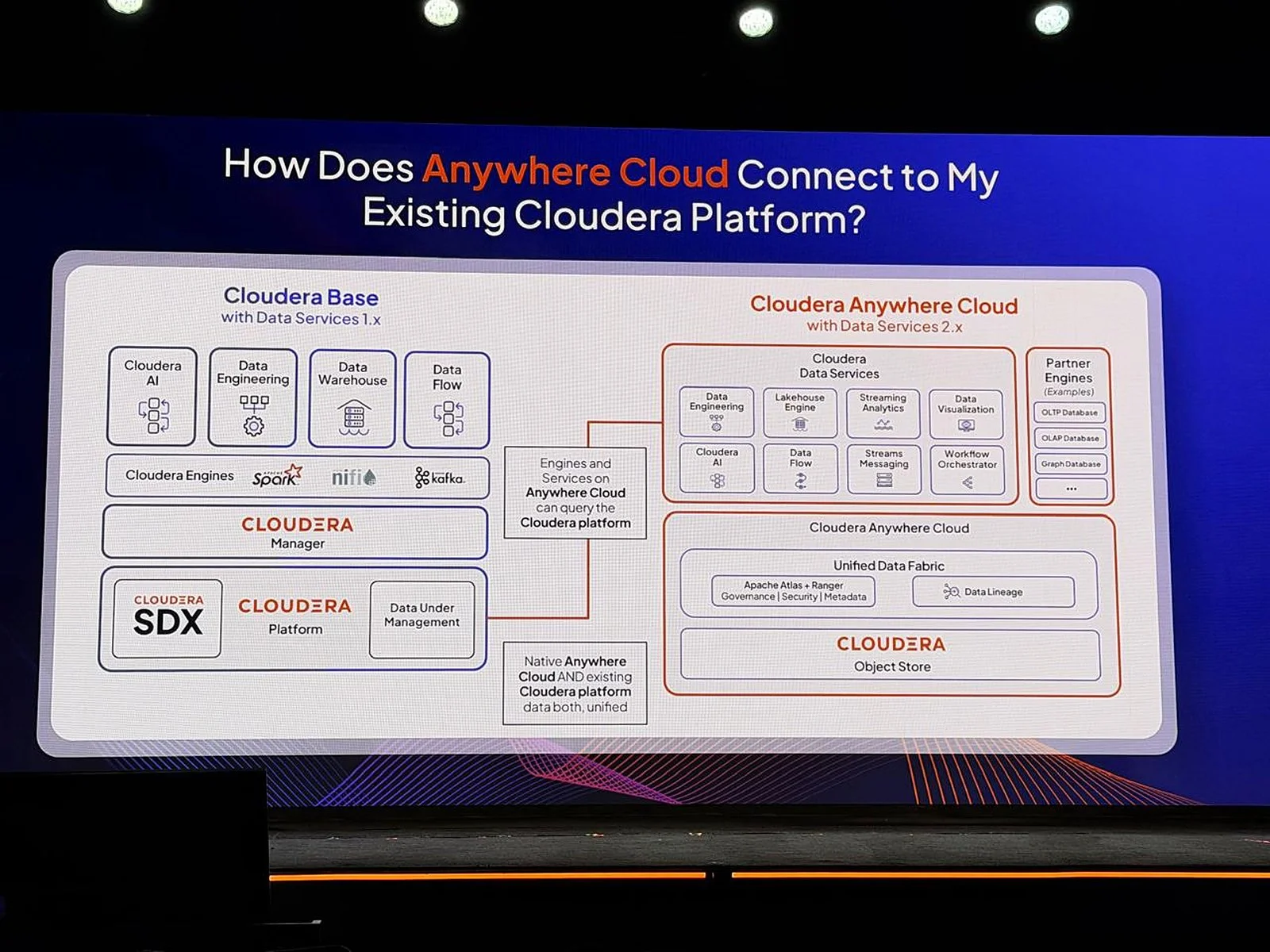
If you already run Cloudera, your first thought is: do I have to migrate? Cloudera gave this its own slide, which I appreciated.
Cloudera Base keeps running Data Services 1.x. Anywhere Cloud runs Data Services 2.x. The engines on Anywhere Cloud can query your existing Cloudera platform directly, so you see native Anywhere Cloud data and your current platform data together. CPO Leo Brunnick told CRN Asia it was built to sit side by side with CDP, with no upgrade needed.
Cloudera Data Services 2.0
The services themselves got a rebuild. 9 of them now run on Anywhere Cloud:
| Service | Built on | What it does |
|---|---|---|
| Cloudera AI | Workbench | Low to high code, dev to prod |
| Lakehouse Engine | Trino | High-performance, low-latency federation |
| Data Flow | NiFi | Enterprise-grade data pipelines |
| Data Engineering | Spark | Scalable pipelines |
| Data Explorer | Multiple sources | Unified data exploration |
| Streaming Analytics | Flink | Low-code SQL Stream Builder |
| Workflow Orchestrator | Airflow | Independent, unified orchestration |
| Data Visualization | Native | Self-service dashboards and sharing |
| Streams Messaging | Kafka | Surveyor to monitor and manage clusters |
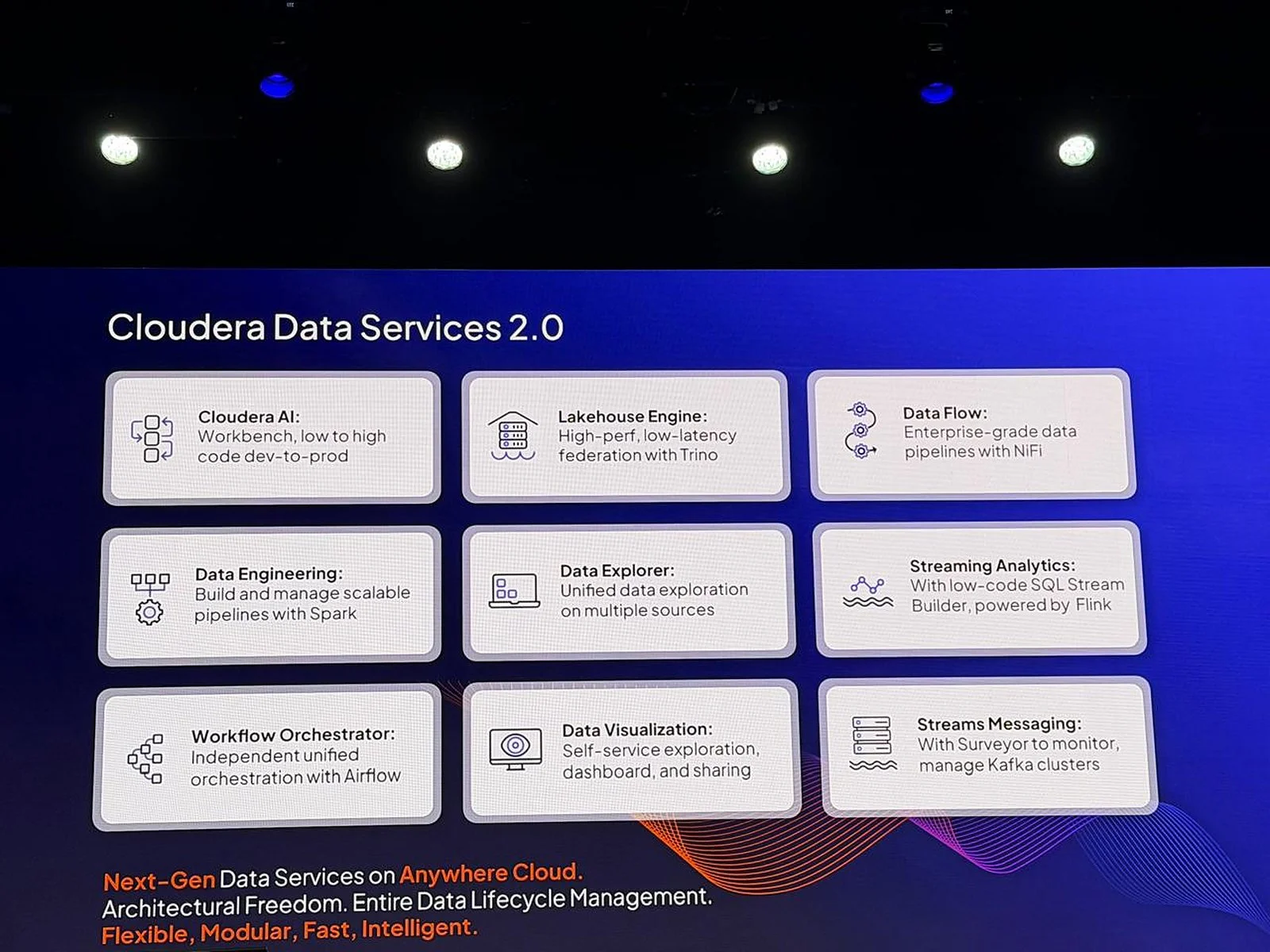
Notice the pattern. Every engine is open source. Trino, NiFi, Spark, Flink, Airflow, Kafka. Cloudera wants to be the best place to run open engines, wherever your data sits.
The open lakehouse, and sharing with your competitors' platforms
The Open Data Lakehouse is still built on Iceberg, tuned by the Cloudera Lakehouse Optimizer, with SDX for security and governance. It runs on HDFS, Ozone or cloud storage.
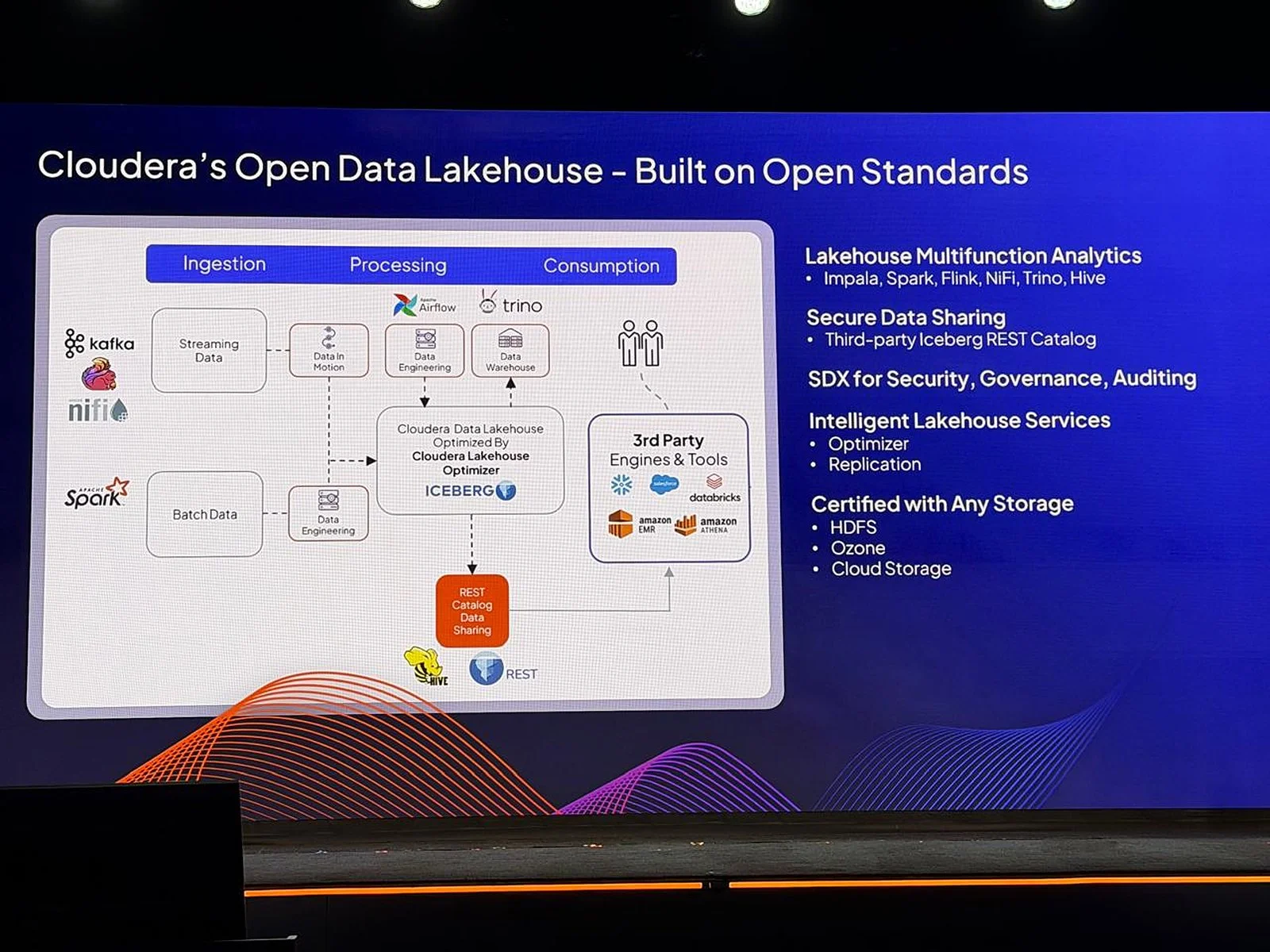
The part that made me sit up: data sharing through an Iceberg REST Catalog, with Snowflake, Databricks, Salesforce, Amazon EMR, Amazon Athena and Spark all on the slide as consumers. Banking risk scores. Healthcare patient records. Retail inventory. Shared with partners and regulators, under governance, without copying the data.
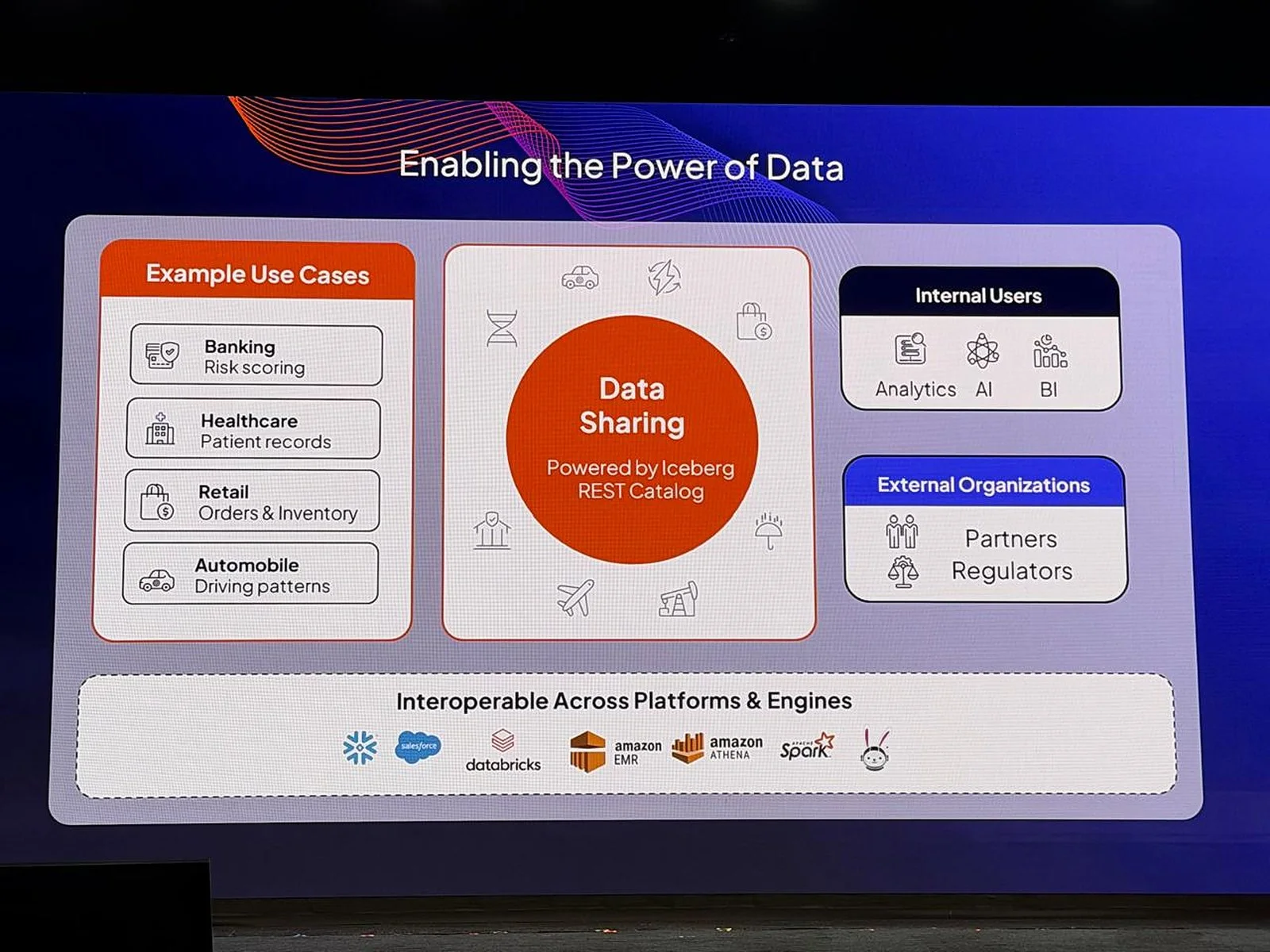
Most enterprises I talk to run 2 or 3 data platforms. Pretending otherwise is how vendors lose trust. Cloudera put its "rivals" on its own slide, and I think that is the right call.
The Cloudera Private AI Factory
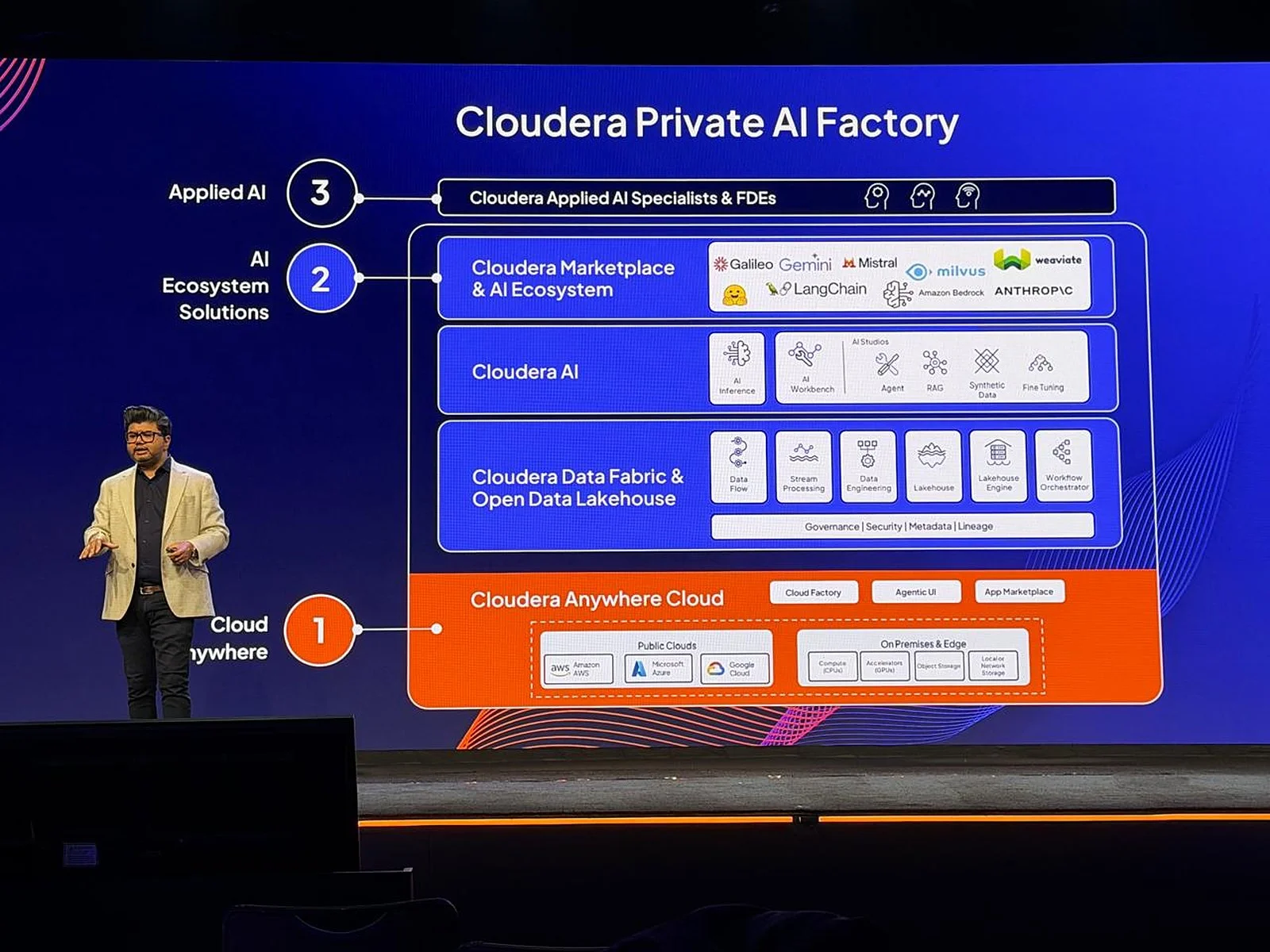
This was the main frame of the day. An AI factory is an environment that keeps turning governed data into insight and action. Cloudera's version has 3 parts.
- Anywhere Cloud: the enterprise, sovereign, unified agentic platform
- AI Ecosystem Solutions: accelerated infrastructure, optimized models, specialized tooling
- Applied AI: forward deployed engineering, solution blueprints, measurable outcomes
Tying them together are 5 Cs: consistency, context, control, choice and capabilities.
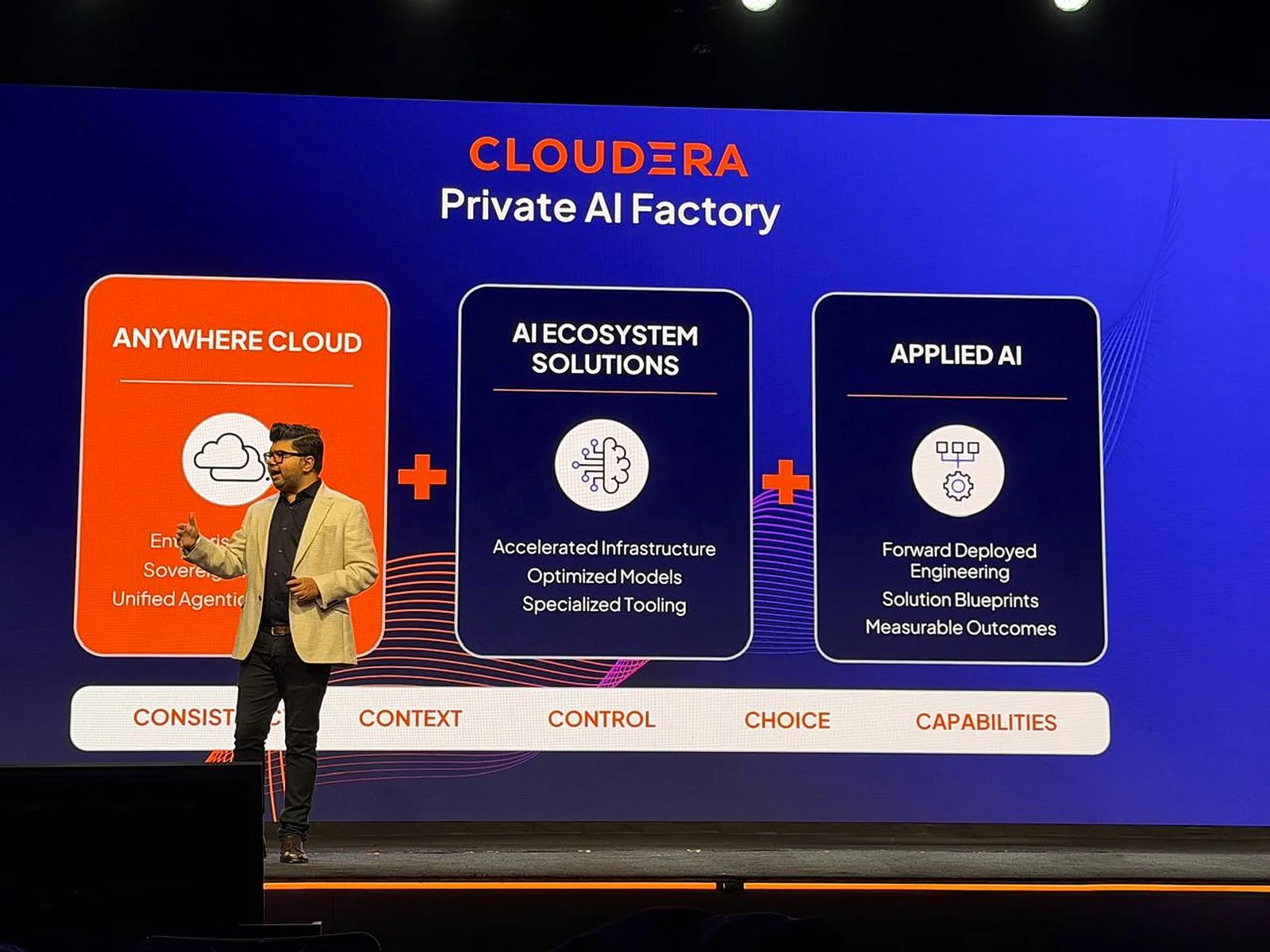
The full stack slide is worth zooming into. At the bottom, Anywhere Cloud with Cloud Factory, an Agentic UI and an App Marketplace. Above it, the data fabric and lakehouse. Then Cloudera AI, with AI Inference, AI Workbench and AI Studios for agents, RAG, synthetic data and fine tuning. Then the marketplace of models and tools: Mistral, Anthropic, Gemini, Amazon Bedrock, Hugging Face, LangChain, Milvus, Weaviate, Galileo. And on top, humans: Cloudera's applied AI specialists and FDEs.
The slide I will remember: 2.2Bn scorings a day
Every keynote has architecture slides. Few have proof slides. This one did.
Cloudera walked through a customer churn use case on Anywhere Cloud. Data streams in through Kafka and Flink into an Iceberg lakehouse. XGBoost models are trained in AI Workbench and governed in an AI registry through SDX. Spark and MLflow run daily batch scoring. Then agents built with CrewAI and Llama recommend the next best action for each account.
The kicker: it was built in the cloud and deployed on-prem with no rewrite.
| Outcome | Result |
|---|---|
| Models in production | 40+ |
| Records scored | 55M |
| Scorings per day | 2.2Bn |
| Fewer lost accounts | 100,000 |
| TCO improvement | 50 to 70% |
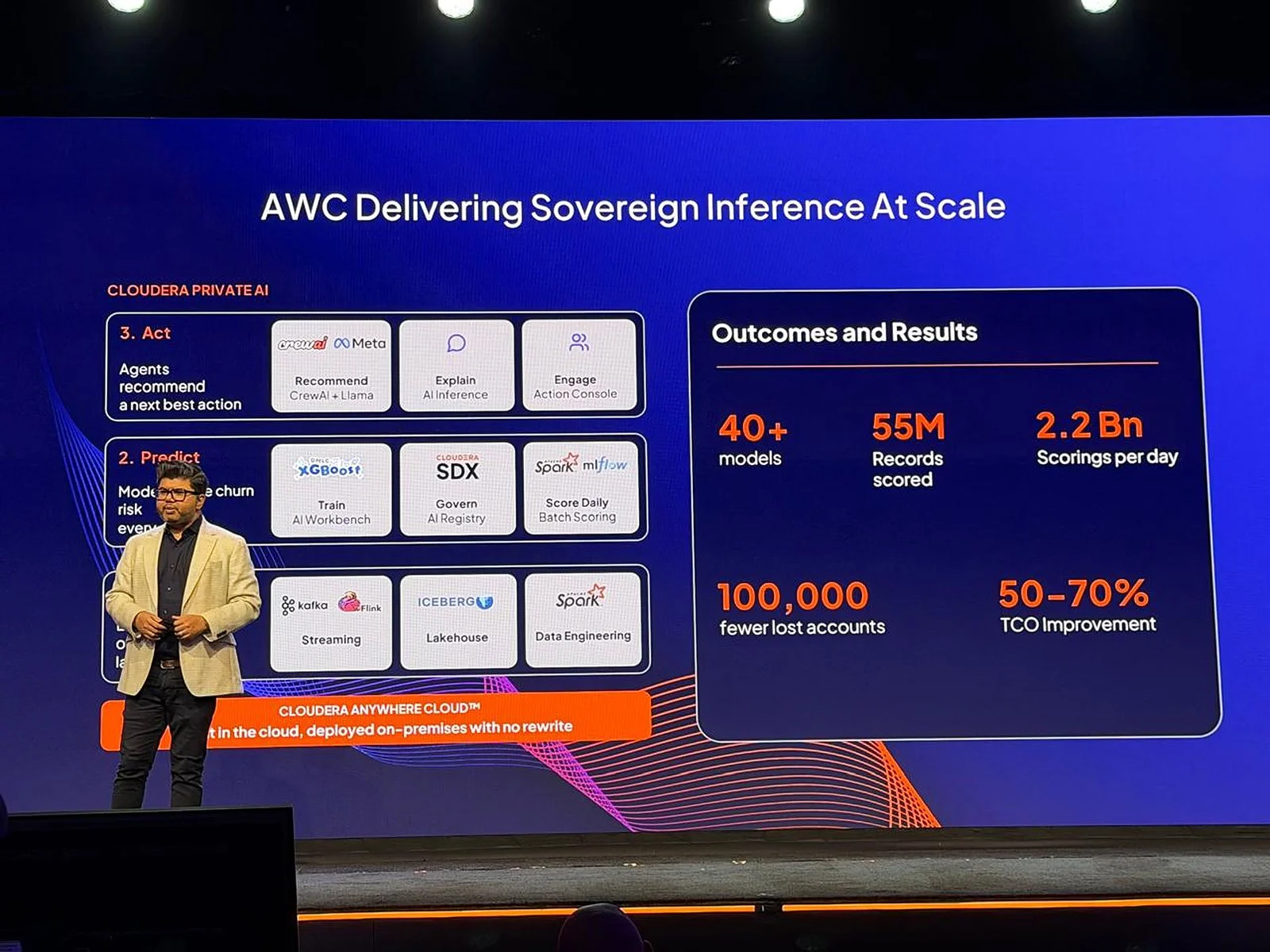
"Build once, run anywhere" has been promised for a decade. This is the first time I have seen it come with a production number this big attached.
Mistral on stage: private AI you actually own
Cloudera and Mistral announced a multi-year strategic partnership in September, which SiliconANGLE reported as a nine-figure deal. Today we saw what it turns into.
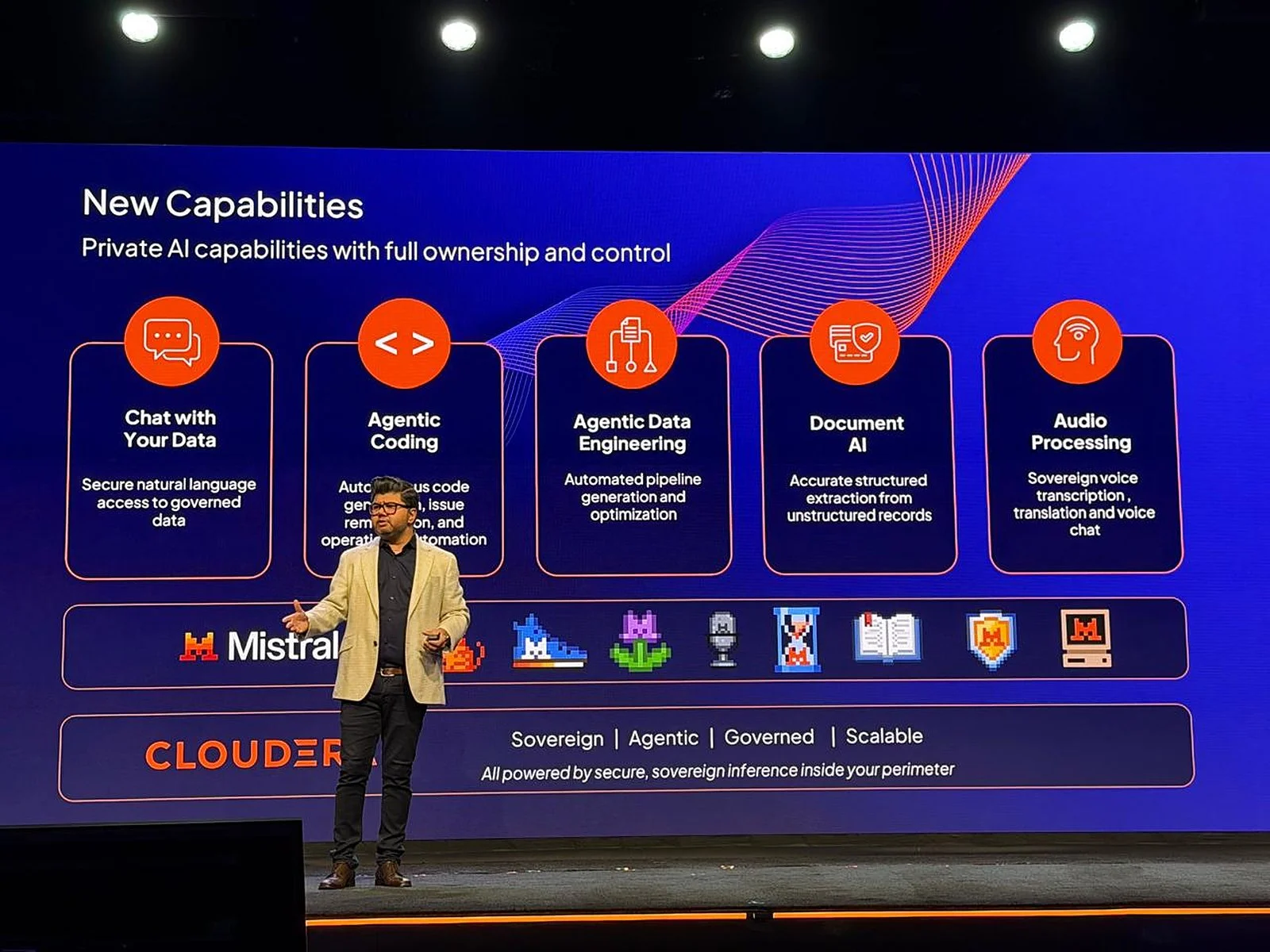
5 new private AI capabilities, all on sovereign inference inside your own perimeter:
- Chat with your data: natural language access to governed data
- Agentic coding: code generation, issue remediation and operations automation
- Agentic data engineering: pipelines that build and tune themselves
- Document AI: structured extraction from unstructured records
- Audio processing: sovereign transcription, translation and voice chat
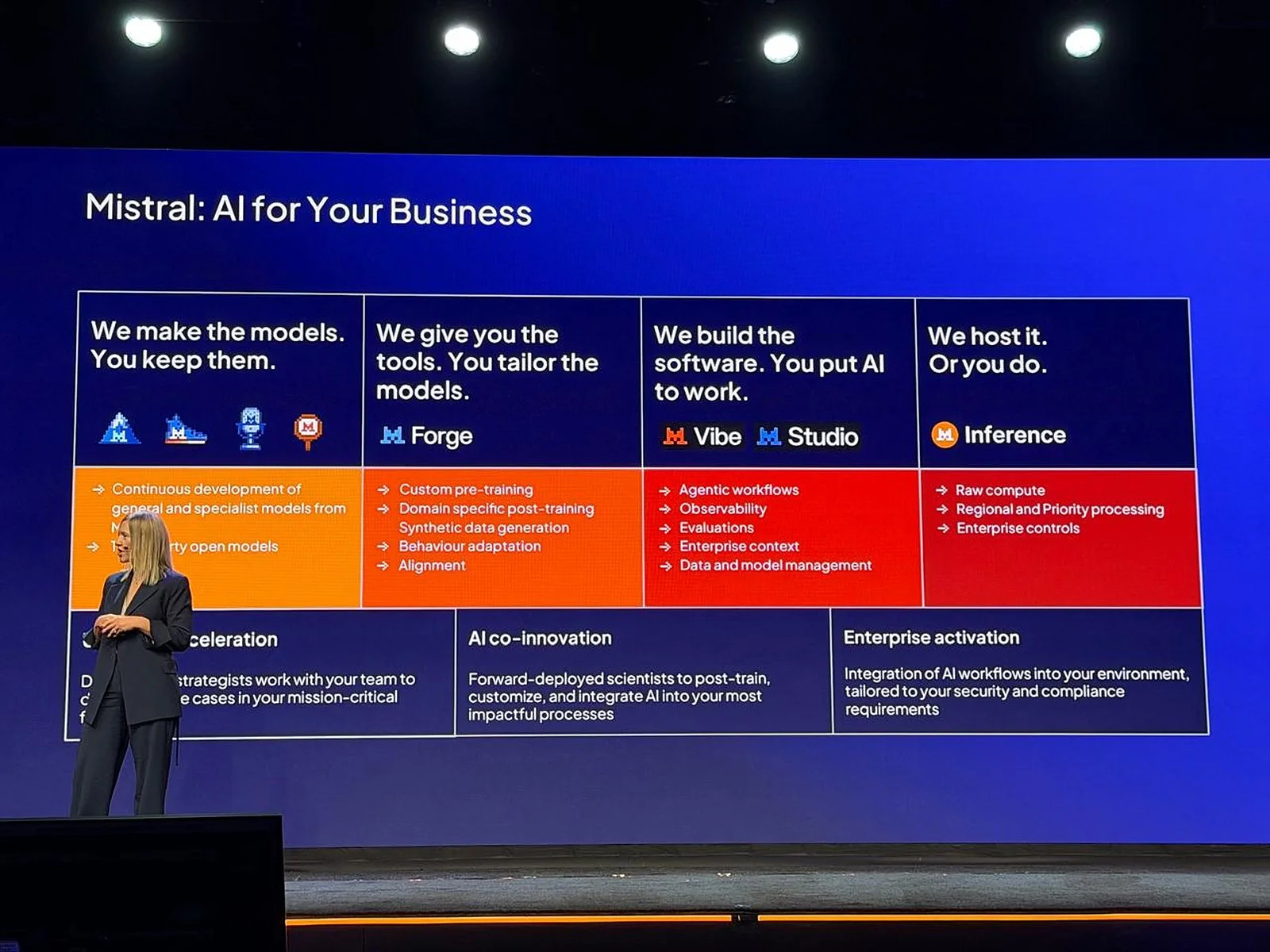
Mistral also took the stage to explain its own model. They make the models and you keep them. Forge lets you tailor them with custom pre-training, post-training, synthetic data and alignment. Vibe and Studio put AI to work with agentic workflows, observability and evaluations. And Inference runs wherever you want, hosted by them or by you.
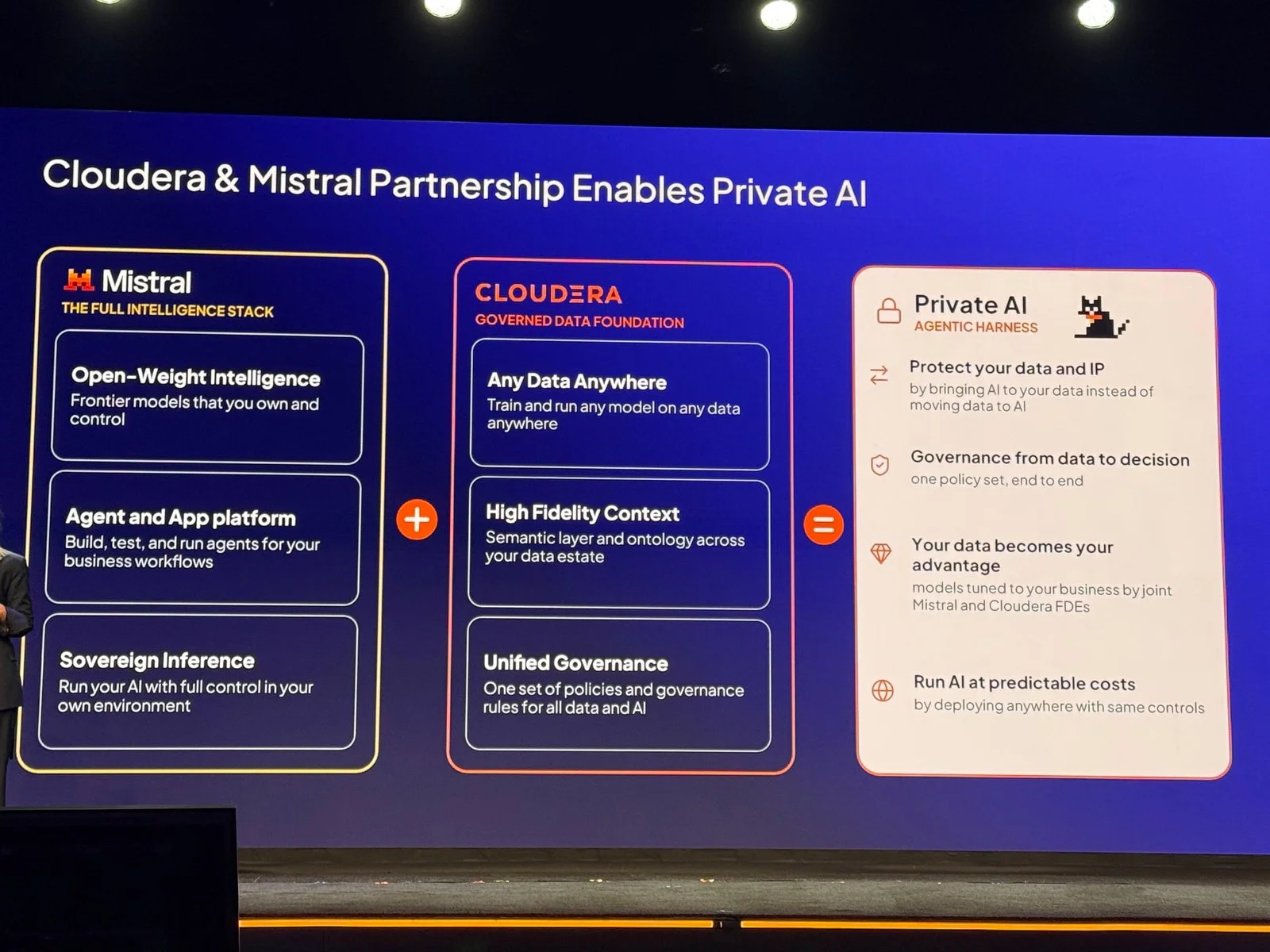
The joint slide made the deal clear. Mistral brings open-weight intelligence, an agent platform and sovereign inference. Cloudera brings any data anywhere, a semantic layer and ontology for context, and 1 set of governance rules. Together, a Private AI agentic harness: AI comes to your data, governance runs from data to decision, models get tuned to your business by joint Mistral and Cloudera FDEs, and costs stay predictable.
If you want an analyst view, Futurum's Brad Shimmin expects this to put real pressure on cloud-first rivals in sovereign deals, and TechTarget has good context too.
The ecosystem gets bigger: Neo4j, Cartesia, Mistral, VAST
The first press release of the day, Cloudera Expands Enterprise AI Ecosystem to Power AI Factories Anywhere, adds 2 new partners and deepens 2 more. Think of it as 4 layers of the factory.
| Partner | Layer | What it brings |
|---|---|---|
| Neo4j | Connected knowledge | Knowledge graphs, so agents can reason over how customers, products, transactions and processes connect |
| Cartesia | Sovereign voice | Speech generation and transcription inside customer-controlled environments, under 90 ms; Sonic-3.6 ranked first on both Artificial Analysis speech arena leaderboards at launch |
| Mistral AI | Specialised intelligence | The announced 1.05-trillion-parameter Large 4, Timestral forecasting models, Robostral for embodied navigation |
| VAST Data | Data infrastructure | High-throughput, low-latency data that keeps GPUs busy |
Abhas Ricky, Chief Business Officer and GM, Applied AI at Cloudera, framed the goal as making every enterprise an AI factory, with the freedom to choose models, keep control of data and improve the economics of every workload.
Cartesia CEO Karan Goel made the point I agree with most: voice is becoming the main interface for AI, and the companies that gain the most are the ones with the strictest sovereignty rules.
The VAST piece builds on their July AI factory partnership, aimed at GPU starvation. VAST's own blog and SiliconANGLE's write-up explain the storage side well. This all extends Cloudera's 2024 and 2025 ecosystem work.
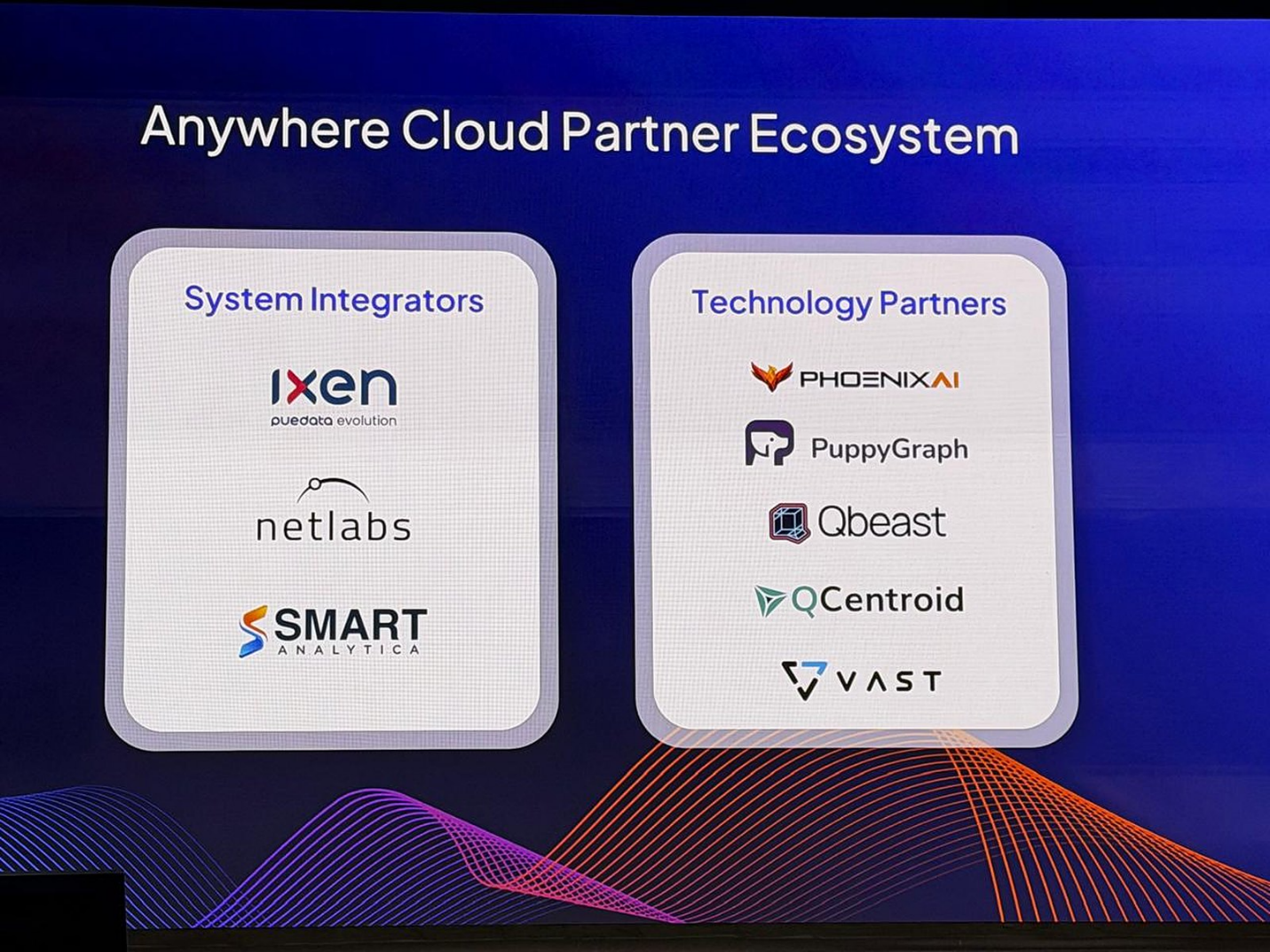
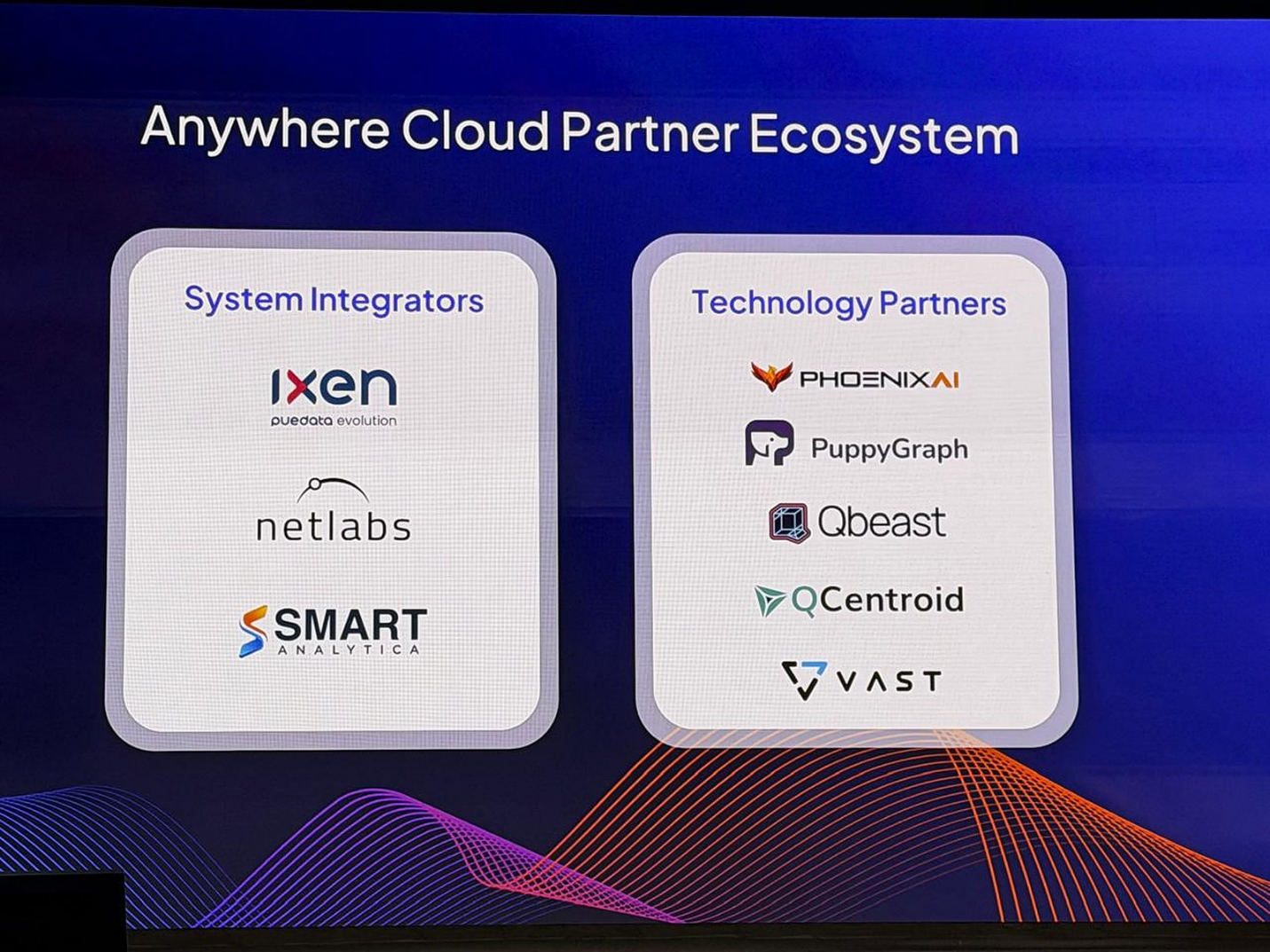
On the Anywhere Cloud side, the partner slide listed IXEN, netlabs and Smart Analytica as system integrators, and PhoenixAI, PuppyGraph, Qbeast, QCentroid and VAST as technology partners. PhoenixAI, the original creator of StarRocks, comes in as a foundational database partner on the marketplace.
Cloudera Blueprints with NVIDIA Agent Toolkit
The second press release, Cloudera Launches Cloudera Blueprints, goes after the hardest step in enterprise AI: getting from a working demo to production.
Cloudera Blueprints are ready-to-deploy AI solutions that run directly on Cloudera AI. They build on Cloudera's existing Accelerators for ML Projects and add NVIDIA AI Blueprints built with NVIDIA Agent Toolkit. The first 4:
- Build Your Own Transaction Foundation Model: fraud detection, risk and personalization for financial institutions
- Ambient Healthcare Agents: turning patient and provider conversations into clinical notes, plus intake and scheduling
- Telecom Network Configuration Planning Agents: recommending, applying and validating RAN configurations
- Synthetic Video Detection: spotting AI-generated video for identity and fraud prevention
Under the hood, NVIDIA NIM microservices and NVIDIA Nemotron models run through Cloudera AI Inference, and NVIDIA cuDF speeds up Apache Spark in Cloudera Data Engineering.
Leo Brunnick, Cloudera's Chief Product Officer, put it plainly: enterprises want to move past experiments, and the gap is turning prototypes into production when data is spread across complex environments. Pat Lee from NVIDIA added that the goal is deploying AI wherever the data sits, in the cloud, on-prem or at the edge.
Cloudera Applied AI: the people part
The last piece was people. Cloudera Applied AI brings Industry Solution Leaders, Applied AI Specialists and Forward Deployed AI Engineers into a 4-step path.
- Strategy: use case discovery, hands-on labs, an AI blueprints catalog
- Design: an AI design workshop, solution architecture, a delivery plan
- Pilot: build with real data, validate in your environment, measure outcomes
- Scale: de-risk the production path, hand off, expand use cases
Forward deployed engineering is showing up at almost every enterprise event I cover this season. There is a reason. The tech is rarely the blocker anymore. The blocker is the first 90 days.
My take
I have covered a lot of data and AI keynotes this year. Here is what I think after this one.
1. The data owners are about to have their moment. The companies with the most valuable data, banks, hospitals, telcos and governments, are also the ones who cannot ship that data to someone else's API. They have been watching the AI wave from the shore. Cloudera already sits on a huge share of that data, and today it showed up with models (Mistral), acceleration (NVIDIA), throughput (VAST), knowledge graphs (Neo4j) and voice (Cartesia), all able to run inside the customer's walls.
2. Sovereignty is now a buying criterion. It shows up early in the deal. I see this every time I am back in India, and I hear it in Europe and in regulated US industries too. Where the model runs and who controls it is now part of the first conversation.
3. Open beats lock-in, and Cloudera is leaning all the way in. Iceberg REST sharing with Snowflake and Databricks. Every Data Services 2.0 engine is open source. A model marketplace with Mistral, Anthropic and Gemini side by side. That is a confident bet that customers will pick the platform that plays well with others.
4. The proof slide matters more than the vision slide. 2.2Bn scorings a day, built in the cloud, moved on-prem without a rewrite. That is the sentence I would want to read if I were a CIO.
What I am still watching. General availability timing for Anywhere Cloud. Early coverage pointed to Nov 30, and I want to hear it confirmed. I also want to see how fast a Base 1.x customer can actually reach Data Services 2.x, and I want named customers behind numbers like the churn result. Those are exactly the questions I am taking into my interviews here this week.
What's next
Interviews from EVOLVE26 New York are coming to The Ravit Show this week. If you want to dig in yourself, Cloudera is hosting ClouderaNOW on Dec 9, and the Great AI Re-Architecture report is a solid read on where enterprise architecture is going.
See you in the next one.
Sources and further reading
Today's announcements
- Cloudera Expands Enterprise AI Ecosystem to Power AI Factories Anywhere
- Cloudera Launches Cloudera Blueprints, Bringing NVIDIA Agent Toolkit to Enterprise Data Anywhere
Cloudera products
Background coverage
- Anywhere Cloud launch, BigDATAwire
- CRN Asia on Anywhere Cloud
- StorageReview on Anywhere Cloud
- DataCentreNews: a Hadoop-free platform
- Mistral x Cloudera
- Futurum on Cloudera and Mistral
- TechTarget on Cloudera and Mistral
- Cloudera and VAST Data partnership
- VAST: Build AI Factories with Cloudera
- NVIDIA Agent Toolkit
Latest Press Releases
Stay informed with product updates and announcements